

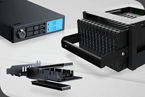
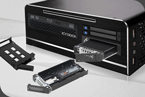
Concept Product CP128-4 Bay 2.5" SATA/SAS/NVMe (U.2/U.3) SSD/HDD UBM Mobile Rack Enclosure for 5.25” Drive Bay | ICY DOCK Community

Concept Product CP128-4 Bay 2.5" SATA/SAS/NVMe (U.2/U.3) SSD/HDD UBM Mobile Rack Enclosure for 5.25” Drive Bay

icydock_admin

Administrator
Staff member
Jan 21, 2024
172
21
18
Concept Product CP128
4 Bay 2.5" SATA/SAS/NVMe (U.2/U.3) SSD/HDD UBM Mobile Rack Enclosure for 5.25” Drive Bay

CP128_1280X853_01.webp


👉 Product Page: https://global.icydock.com/product_345.html 👈
Any product suggestion or new idea will be highly appreciated!
​


Key Features​

  • World’s first Universal Backplane Management (UBM) drive mobile rack enclosure
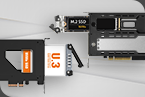
  • Supports 4x 2.5" SAS/SATA/NVMe (U.2/U.3) SSD/HDD
  • Supports SAS 4.0 (up to 22.5Gbps), SATA 3.0 (up to 6Gbps), and NVMe Gen 4 (up to 64Gbps)
  • Installs into any standard external 5.25" optical drive bay
  • Uses 2 x SlimSAS 8i (for NVMe) & 1x SlimSAS 4i (for SAS/SATA) rear connectors
  • Ruggedized full-metal enclosure meeting flammability requirements
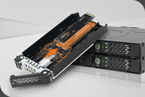
  • Removable drive tray system with hot-plug support for easy maintenance
  • Active Power Technology (APT) - only powers up if a drive is installed in the drive bay
  • Dual high-performance 40x20mm cooling fans with three fan speed settings (high, low, off)
  • The eagle-hook tray system securely holds the drive tray inside the enclosure
  • EMI Grounding – protects SSDs from electrical damage

CP128_banner.webp

CP128_V3-in_525_bay.webp

CP125_m2_installation_steps.webp

CP128_USM_2.webp

CP128_removable_drive_GIF.gif

CP128_Cooling.webp

CP128_full_metal.webp


​
 
The mixed SATA/SAS/NVMe support is interesting. Does the UBM backplane handle drive detection and power per bay independently, or does the host need to know which bays are populated with which interface? Also, if all four bays are mixed between SATA and NVMe, are both SlimSAS 8i links and the single SlimSAS 4i link always required, or can one be left disconnected depending on the configuration?
 
The mixed SATA/SAS/NVMe support is interesting. Does the UBM backplane handle drive detection and power per bay independently, or does the host need to know which bays are populated with which interface? Also, if all four bays are mixed between SATA and NVMe, are both SlimSAS 8i links and the single SlimSAS 4i link always required, or can one be left disconnected depending on the configuration?
From what I can see, the SlimSAS 8i connector carries only the NVMe signal, while the SlimSAS 4i connector carries the SAS/SATA signal. So, logically, if you're using only NVMe or only SAS/SATA, you should be able to use just one data connector; if you're using a mix of NVMe, SAS, and SATA, I'm 100% sure you'll need to connect both.

As for the UBM standard, as far as I know, it should instantly identify the type of drive inserted and, in theory, balance power limits and port routing to the host via the UBM controller. I'm not sure if it manages each bay individually, but logically speaking, I'd say it does.
 
The mixed SATA/SAS/NVMe support is interesting. Does the UBM backplane handle drive detection and power per bay independently, or does the host need to know which bays are populated with which interface? Also, if all four bays are mixed between SATA and NVMe, are both SlimSAS 8i links and the single SlimSAS 4i link always required, or can one be left disconnected depending on the configuration?
Hi sarahrobinson, thanks for the great question, and thanks juri1309 for jumping in. Here’s how the CP128 concept design handles it:


1. Drive detection and power are handled per bay, independently.
Each bay is detected and managed on its own. When a drive is inserted, the backplane detects which interface it uses (SATA, SAS or NVMe) through the drive’s presence and interface-detect signals on the U.2/U.3 connector. The UBM controller then reports each bay’s status to the host controller over the UBM 2-wire sideband in the SlimSAS cable. You don’t need to tell the host in advance which bay holds which drive type. A UBM-aware tri-mode HBA/RAID controller (for example the Broadcom 9500/9600 series) reads this information and enables the right link for each bay automatically. The same sideband also handles each bay’s reset, hot-plug events and activity/fault LEDs.

Power works per bay too. With Active Power Technology (APT), a bay only receives power when a drive is installed, and inserting or removing one drive doesn’t affect the others. Drive power comes from the enclosure’s own power input, not from the SlimSAS cables.

2. Cabling: connect the links for the interfaces you actually use.
In the current concept:
  • -SlimSAS 4i carries SAS/SATA, one lane per bay for all four bays.
  • -The two SlimSAS 8i carry NVMe, PCIe x4 per bay, so each 8i serves two bays (8i #1 → bays 1–2, 8i #2 → bays 3–4).
So the three connectors aren’t always required:
ConfigurationCables needed
SAS/SATA onlySlimSAS 4i only
NVMe only, all 4 baysBoth SlimSAS 8i
NVMe only in bays 1–2SlimSAS 8i #1 only
Mixed SATA/SAS + NVMeSlimSAS 4i + the 8i link(s) covering the bays that hold NVMe drives

A bay whose interface isn’t cabled will still be detected, but it can’t establish a data link. For example, an NVMe drive in bay 3 with 8i #2 disconnected won’t show up as a usable drive. If you plan to swap drive types freely (“any drive in any bay”), we recommend connecting all three links.


3. A note on host controllers.
Full UBM features (auto-detection, hot-plug management, LEDs) need a UBM-capable tri-mode controller. The enclosure also works on non-UBM setups, such as motherboard SATA ports through a SlimSAS 4i breakout, or a PCIe switch/retimer card for NVMe. In that case basic data access works, but hot-plug and LED behavior depends on the platform.

Since CP128 is still a concept product, we’d love your input:
  • -Which HBA/RAID controller or motherboard would you pair it with?
  • -Would a simplified cabling option be useful to you, for example a single-connector tri-mode (U.3-only) version?
Your feedback goes straight into our design decisions.

BR,

Alec